


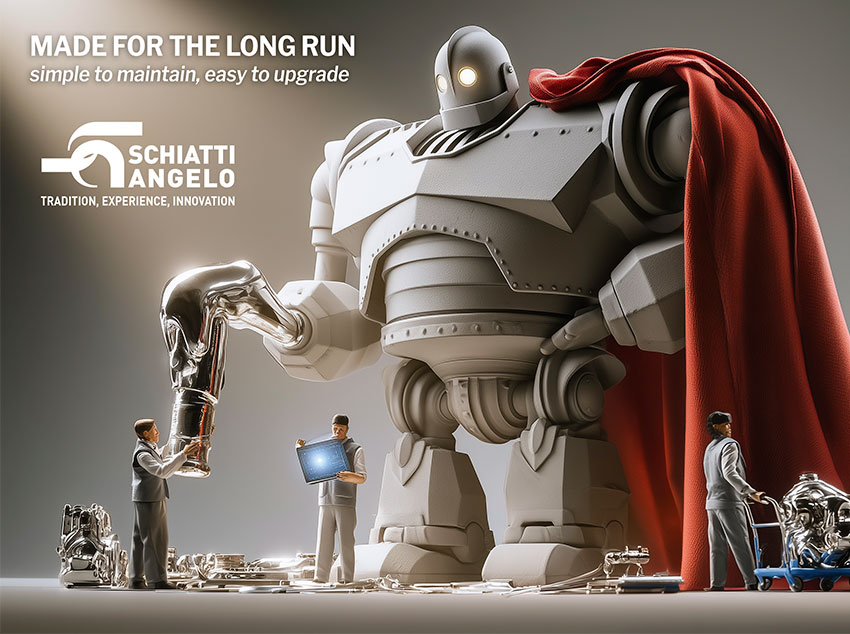
Choosing a flat glass processing machine means evaluating the total cost over fifteen years, not just the purchase price. The four decisive criteria are four: mechanical durability, scheduled maintenance, the supplier's service level over time and the option to revamp the machine when the time comes. The list price often accounts for less than fifty per cent of the actual cost per square metre processed over the full working life of the line.
Many of the glass processors evaluating a new edging, drilling or cutting line today are not buying their first machine. They have production history, downtime logs, maintenance records and a clear read on cost per square metre processed. At that point the question stops being "which machine is cheaper" and starts being "which machine is cheaper over ten years". The shift sounds subtle. In practice it changes almost every criterion worth looking at when a line is specified.
Purchase price or total cost: what really needs to be evaluated
The list price is the most visible figure in any quotation, and almost never the one that actually decides the economics of a line. An edger priced at X that runs for twenty years on scheduled maintenance has a very different cost per square metre than one priced at 0.7X that needs a major overhaul in its seventh year. The gap only shows up when the operator starts tracking downtime hours, spare part consumption, energy draw per cycle and the labour hours spent on recurring repairs. A typical amortisation runs five to seven years. A realistic evaluation horizon runs fifteen or more. The difference between those two numbers is where the real return on the investment is decided.
Mechanical durability and reduced maintenance: where the difference shows after five years
Electronics and software have converged across the industry at speed. Frame rigidity, quality of sliding materials, spindle tolerances, vibration isolation and guide protection are the details that often decide precision after fifty thousand operating hours.
A concrete case. On a double edging line, the alignment of opposing spindles at year ten depends on frame stiffness and on the thermal stability of the cooling circuit. A machine built with structural compromises starts drifting after a few years. The operator responds with more frequent recalibration and progressively looser tolerances, which eventually turn into rework and dimensional errors.
Maintenance should not be treated as an add-on feature marketed with slogans. The question that matters to a production manager is simpler: how often does the line stop, and for how long. The goal is to reduce the frequency of interventions. Good diagnostics shifts maintenance from a chronic activity to a scheduled one. A properly implemented predictive diagnostic layer, combined with monitoring of hydraulic pressure and vibration, can bring routine maintenance down by around fifty per cent. A rubberized-pad conveyor with integrated ball bearings that cuts friction by around eighty per cent reduces wear on the handling system and extends the replacement interval for pads and guides. These are numbers that feed directly into the total cost of ownership calculation.
Supplier service as part of the investment
A flat glass processing machine is an industrial asset that lives fifteen, twenty, sometimes thirty years. Whoever buys one is not closing a supply order, they are opening a working relationship that has to hold for a decade or more. The real level of service the supplier will be able to guarantee over that span is an economic variable, not a side topic.
At the point of selection it helps to quantify very concrete parameters. The response time when a line goes down in a full production week. The availability of technicians who still know the machine ten years after installation, with continuity of internal competence on the configurations originally delivered. The supplier's ability to advise on cycle optimisation when a new product mix enters the shop, or when average glass thickness changes. The spare parts policy, meaning actual stock availability and compatibility maintained over time, including across previous machine generations. Software updates, which have to remain compatible with the installed hardware rather than forcing a replacement at the first platform change.
To these parameters one more dimension belongs, less visible but with direct impact on the P&L: the supplier's ability to anticipate a problem before it turns into a stop. Remote support, operating parameter monitoring, continuous technical dialogue with the client's maintenance staff. The value shows up in the problems avoided, not in the problems solved, and it is a substantial economic value, measurable.
Operator training: the underestimated variable
Training of the client's personnel also belongs to the service dimension, and it decides how much of the machine's potential is actually used on the shop floor. A structured operator training session at delivery is not enough. Staff turnover, shift changes and the introduction of new products require refresh sessions that can be scheduled over time. A supplier that keeps a dedicated training capability, with updated materials and on-site coaching when needed, protects the client's investment from the main cause of under-utilisation of a line: approximate operation, which over the years erodes productivity and precision more than any mechanical wear.
Revamping: when upgrading beats replacing
A consequence of mechanical robustness that is rarely discussed openly is this: a machine is worth upgrading only when its structural base is still intact. If the frame and load-bearing geometries have deteriorated, no electronic or component upgrade will deliver a real return.
Revamping, understood as the replacement of electronic groups, update of CNC systems and renewal of spindles and worn components, can bring a line of ten or fifteen years back to performance close to a new unit at a fraction of the replacement cost.
Floor space inside running plants is often a constraint. Environmental and installation permits for new lines are slower than they used to be. Delivery times on new equipment have lengthened. A planned revamp carried out during a scheduled stop can extend the productive life of a machine by another decade and keep the capital expenditure profile flat.
A revamping programme is not generic maintenance. Its scope is defined machine by machine, based on what the structural condition actually allows and on what the production line needs at that point. The typical set of interventions includes a CNC retrofit with a current-generation controller, replacement of worn spindles and bearing assemblies, overhaul of the hydraulic circuit with new pumps and valves where consumption data justifies it, HMI update with modern operator interfaces, installation of additional sensors on points originally left unmonitored and, in many cases, the integration of a predictive diagnostic layer on machines that were born without one. Each of these interventions has its own payback and can be scheduled across several planned shutdowns rather than concentrated in a single long stop.
At Schiatti Angelo, revamping is a consolidated line of activity on machines installed decades ago, which are kept continuously renewed on both the mechanical and the technological side. Quality standards demanded by downstream customers, in architecture, automotive and interiors, keep climbing. With them grows the need to choose an industrial partner rather than a one-off supply.
Frequently asked questions
How is the total cost of a glass processing machine calculated?
Total cost of ownership adds to the purchase price all the items that weigh on the machine's working life: energy consumption per cycle, spare parts, downtime hours, ordinary and extraordinary maintenance labour, software and hardware upgrades. The realistic calculation horizon is fifteen years. The most common metric is cost per square metre of glass actually processed.
How long does an industrial glass processing machine last?
An industrial flat glass processing machine built on a robust mechanical base can stay in production between fifteen and thirty years. The main variable is the structural quality of frame, spindles and sliding systems. Electronics and software are updated over time through scheduled revamping interventions.
What is revamping of a glass processing machine?
Revamping is a technical upgrade that brings an existing machine back to performance close to a new unit, at a fraction of the replacement cost. It typically includes CNC retrofit, replacement of spindles and worn components, overhaul of the hydraulic circuit, HMI update and integration of predictive diagnostics.
When is revamping better than buying a new glass machine?
Revamping makes sense when the mechanical base of the existing machine is still intact, floor space is constrained, delivery times for new equipment are long or the capital expenditure profile needs to be kept flat. The scope of intervention is defined machine by machine on the basis of a preliminary structural assessment.
How often should a glass edging machine be serviced?
Frequency depends on production load, glass thickness processed and build quality of the machine. Good predictive diagnostics on hydraulic pressure and vibration can shift maintenance from a chronic activity to a scheduled one, reducing routine interventions by around fifty per cent.
What should a good after-sales service contract for glass machinery include?
A proper service contract covers guaranteed response times in case of machine downtime, spare parts availability also for previous machine generations, remote diagnostic support, software updates kept compatible with the installed hardware, cycle optimisation consulting and repeatable operator training sessions over time.